


It was supposed to be a normal Dinner at Madame Necker’s on December 5th, 1789.
Normal, of Course, in the Context of Gouverneur Morris’ early-Revolutionary Paris.
Next to Food and Wine Implication covered the Tables. Politics supplied the Blades; passed from Hand to Hand, admired for their Edge, tested for their Strength, and occasionally drawn against Someone’s Skin.
Wit, Vanity, Flirtation, and the kind of salacious social Undercurrent in which everyone knew more than they said and said more than they could safely defend, made polite Rooms more dangerous than they looked.
Sometimes, the Salon was simply a Battlefield with better Furniture.
That Night Madame Necker’s Room carried a heavy political Charge:
Her Husband, Jacques Necker.
A Swiss Banker turned French Minister and a Protestant Outsider turned public Idol, Necker was now the Man responsible for managing France’s collapsing Finances. He had already become one of those Men whose personal Movements could disturb the Street. When Louis XVI had dismissed him in July, Paris erupted.
Sending Necker away became the primary Catalyst for the Storming of the Bastille.
Necker and his Wife, Swiss Writer and Salonnière Suzanne Curchod, had a Daughter: Anne Louise Germaine de Staël-Holstein.
More famously known as
Madame de Staël.
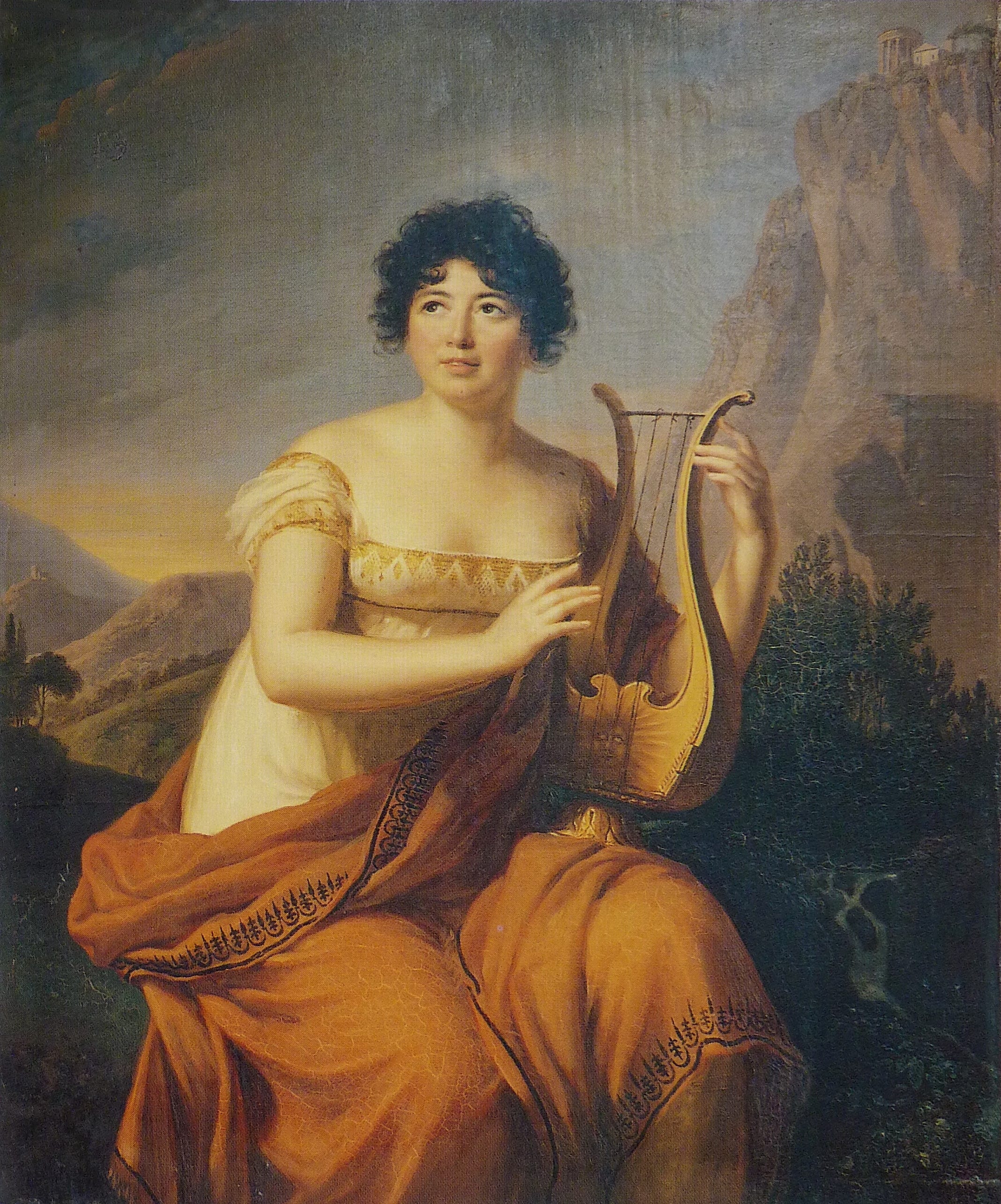

Staël had her own kind of Power. She was not yet the grand exiled Force of Coppet, nor the Woman who would mobilize and draw intellectual Weapons against Napoleon. But she was already far more than a Diplomat’s Wife.
At twenty-three, Anne Louise Germaine was politically fluent, socially exact, and trained in the dangerous Art of the French Salon. She knew how to manage Rooms in which public Power disguised itself as private Conversation.
Gouverneur Morris did too.
He entered Salons with less formal Power than almost Everyone present — and more Command than most of them knew what to do with.
So, like all good Battles, this one begins with a proper Insult.
I. Prejudice
»At Dinner we converse pretty freely upon political Subjects and in Consequence of an Observation I make, Necker exclaims in English : ‘ridiculous Nation!’
He does not know that my Servant understands English.«1
Had Jaques Necker muttered the Insult in French, it could have passed as ordinary Irritation. In a Paris Salon, sharp Exclamations pass constantly as Temper, Theatricality, or ordinary political Heat.
Men like Necker were expected to have Opinions. But by switching into English, he changed the social Mechanics of the Remark. The Contempt was aimed at a selected Group of Listeners.
In 1789, Revolutionary Paris had already made it brutally clear, that every Word said among the Powerful travelled fast and far down the Road.
Servants heard. Messengers carried. Rumors moved faster than Carriages.
A Room like Madame Necker’s was never sealed from the Street. It was connected to it by every Person pouring the Wine, opening the Door, carrying the Coat, or waiting behind the Chair.
Morris gives us one half-Sentence and reveals:
His Servant understands English better than Necker understands Discretion.
If the Judgment is so sound, say it plainly. If the Contempt is so deserved, own it. But Necker wants both Things at once: the Pleasure of looking down and the Protection of not being heard by the full Room — excluding one Group of People in particular.
Morris notices the Move instantly and records it with characteristic Precision:
Prejudice hiding under flimsy Cover.
II. Pride
After Dinner, Morris takes Necker aside.
The Matter itself is not excessively complicated. France holds a large Quantity of American Bonds, and Morris offers to arrange their Purchase through his Connections in America and Holland [find the full Diary Entry here].
But Necker does not ask whether the Offer is good. He asks whether Morris’ Side is prepared to provide solid Security for the entire Operation.
The Demand is remarkable because France would not surrender the Bonds on Trust. Necker would retain them until Payment arrived. Morris therefore asks him to part with nothing before he is paid.
Still, Necker says, before he will even consider that, he wants Certainty that every future Part of an Agreement not yet made will be performed.
Mind you, Necker was not merely another cautious Investor. He was France’s First Minister of Finance. No Man in the Room was better placed to understand that, in December 1789, France itself could not guarantee for anything.
Necker knew better than most, that the Monarchy could no longer warrant its Revenue, its Authority, or even the Tenure of its own Ministers, such as he. Yet he demands a Degree of Security from Morris, greater than the King himself could command.
Ordinary Prudence seeks Protection — but Necker’s Pride demands Exemption from France’s Reality.
Morris does not call the Demand a Bluff. He answers it in the Terms of the real World:
»I reply that no House in Europe is sufficient for so large a Sum and therefore Security as such is Nonsense but that he shall run no Risque for he shall not part with the Effects till he receives the Payment«
That Sentence should have settled the immediate Objection.
It does not.
Necker insists, so Morris cuts the Fog into two clean Questions:
»There are two Points for his Consideration; first whether the Offer is good and secondly whether he is sufficiently secured. That if the Offer is not good it is needless to talk of Security but if it be such as he ought to accept then it will be proper to know what Kind of Responsibility will be sufficient.«
This is where the Difference between the two Men becomes visible:
Necker’s Pride meets Morris’ Sense.
Again, Necker wants Safety before Judgment. First, he sheltered Contempt behind English. Now, he shelters Negotiation behind impossible Security.
Both Moves serve the same Purpose:
Preserving his Pride and Prejudice against Reality.
So, Necker turns the Conversation into a Problem of Guarantee but Morris turns it back into a Problem of Sense: Is the Offer good? If not, stop talking.
If yes, then discuss the Terms that make it workable.
That should have settled the Matter.
Instead, Necker abandons the Proposition and reaches for the Man presenting it.
III. Sensibility
Necker suggests that, if Morris obtains his Promise, he will use it as a Ground for further Negotiation, making Use of the Minister’s Name,
»and go about knocking at the Doors of different People«
Morris hears the Condescension immediately and the Insult does something rare:
It is so rude, Morris loses it.
(A little.)
»This is not a very delicate Comparison.«
Necker reduces Morris from an independent Negotiator with established Connections to a Man outside the House, carrying someone else’s Name from Door to Door to beg for Access, like
a shady Salesman.
First, Prejudice chose the Audience. Then, Pride dictated the Terms.
Now Pride and Prejudice converge to personal Insult.
It is a low Blow, and Morris feels it.
»I reply in a Tone of Dissatisfaction, mingled perhaps with a little Pride, that I shall knock at no Doors but such as are already open to me.«
There it is. A small Correction, a necessary one — and perfectly gentle too.
Necker uses Knocking as an Image of Solicitation, but Morris changes the Meaning. He will knock, certainly, but only where the Door is already open to him.
The Knock is not a Plea for Admission. It is a Gentleman’s Courtesy.
Even where his Welcome is assured, a real Gentleman announces himself, not confusing Familiarity with Permission, Access with Entitlement, or Confidence with Intrusion.
Morris does not use the Moment to justify his Position. He does not explain his Name, his Connections, or why he belongs in the Room. He simply admits that, in a Contest shaped by another Man’s Pride, a little of his own has entered the Field too.
»Mingled perhaps with a little Pride« — the »perhaps« is the Self-Awareness. But what Morris calls out as Pride is actually called Sensibility. The delicate Sense of a Man who knows he does not force Entry, even where no one would deny it.
This is the Difference:
Necker’s Pride expects the World to arrange itself around him.
Morris’ Sensibility only asks, that he may enter it without startling anyone.
But here, his Sensibility detects something else:
»Our Conversation is loud. He makes it so purposely.«
Necker is not losing Control by Accident.
His Loudness is a Weapon. If he can make the Exchange public enough, perhaps Morris will either retreat or return Fire and expose his Position.
Necker has tried Contempt. Necker has tried Diminution.
Now it is down to Noise.
Different Weapons — the same Result:
Gouverneur holds his Ground.
Necker performs Authority — Morris practices it.
IV. Sense
At this Point, Madame de Staël intervenes.
She is not merely a Daughter managing a difficult Father — she intervenes because she understands that the political Exchange has become socially dangerous.
Necker has made the Conversation loud on Purpose. Morris has answered without yielding. The Exchange has become too public to remain discrete, too personal to remain merely financial, and too sharp to continue without damaging the Structure of the Salon.
Staël sees it, so she does what a good Salonnière does:
She moves the Field without seeming to move against anyone.
She asks Morris to send her Father to sit next to her.
A small Gesture. Almost domestic. Deceptively simple. But it is social Intelligence. Staël intervenes without openly correcting her Father. She disguises De-escalation as a Daughter’s Request and gives Necker an Exit that does not look like Retreat.
Morris sees through the Maneuver.
And this Time — he lets his quick Wit take over.
»I tell her smiling that it is a dangerous Task to send away Monsr. Necker and those who tried it once had sufficient Cause to repent of it.«
He makes the whole Scene turn.
The Statement is recklessly direct. Morris takes the Subterfuge everyone is meant to pretend not to notice and makes it the Punchline for the entire Room.
He does not make a Joke to avoid Politics — he makes a Joke out of Politics.
Only a few Months earlier, Louis XVI and the conservative Court Party had sent Necker away. Within Days, Paris rose, the Bastille fell, the replacement Ministry collapsed, its principal Figures fled or worse, and the King was forced to recall Necker in Triumph.
Morris’ Joke is brutally literal. The last People who tried to move Monsieur Necker had nearly brought down Monarchy’s Command.
Morris miniaturizes recent History into a Salon Seating Problem.
That is the peculiar Force of Gouverneur Morris’ Wit.
He says aloud what social Intelligence normally leaves between the Lines, then says it so perfectly that Exposure becomes Rescue. It is the kind of Audacity Washington valued in him — and others mistook for political Unfitness.
The Joke flatters Necker without submitting to him.
It lets Madame de Staël’s Intervention succeed without patronizing her.
It reminds the Room of Necker’s public Importance while quietly ending his garish Performance.
»This little Observation brings back good humor.«
This was the political Risk of Morris’ Wit: Putting into Words what everyone else had agreed to leave unspoken — and being ingenious enough to survive it.
Morris has taken a loud, prideful, potentially ugly Exchange and ended it without Collapse. He did not destroy Necker, but did something much more difficult:
He corrected and contained him — then gave him Room to laugh without losing his Dignity.
Humiliation was available but Morris had the sharper Sense and the finer Sensibility
which gave him the cleaner Command of the Battlefield.
The Adult in the Room did not need Ruins.
He only needed the Room back.
And once he had it, he stopped giving the Man charged with France’s Finances the one Thing he had been trying to command all Evening:
Attention.
»He seems inclined to talk further with me, but I take no farther Notice of him, and after chatting a little with different People I take Leave.«
Morris ended the Battle with a Joke and celebrated his Victory with Silence.
And when Necker reached for his Attention again,
Gouverneur did what the Rest of France could not:
ignore him. ✨
and following: Davenport, Beatrix Cary. A Diary of the French Revolution by Gouverneur Morris 1752-1816 Minister to France during the Terror. George G. Harrap & Co. Ltd., 1939. p.324-325.
[Read the full Transcription here]